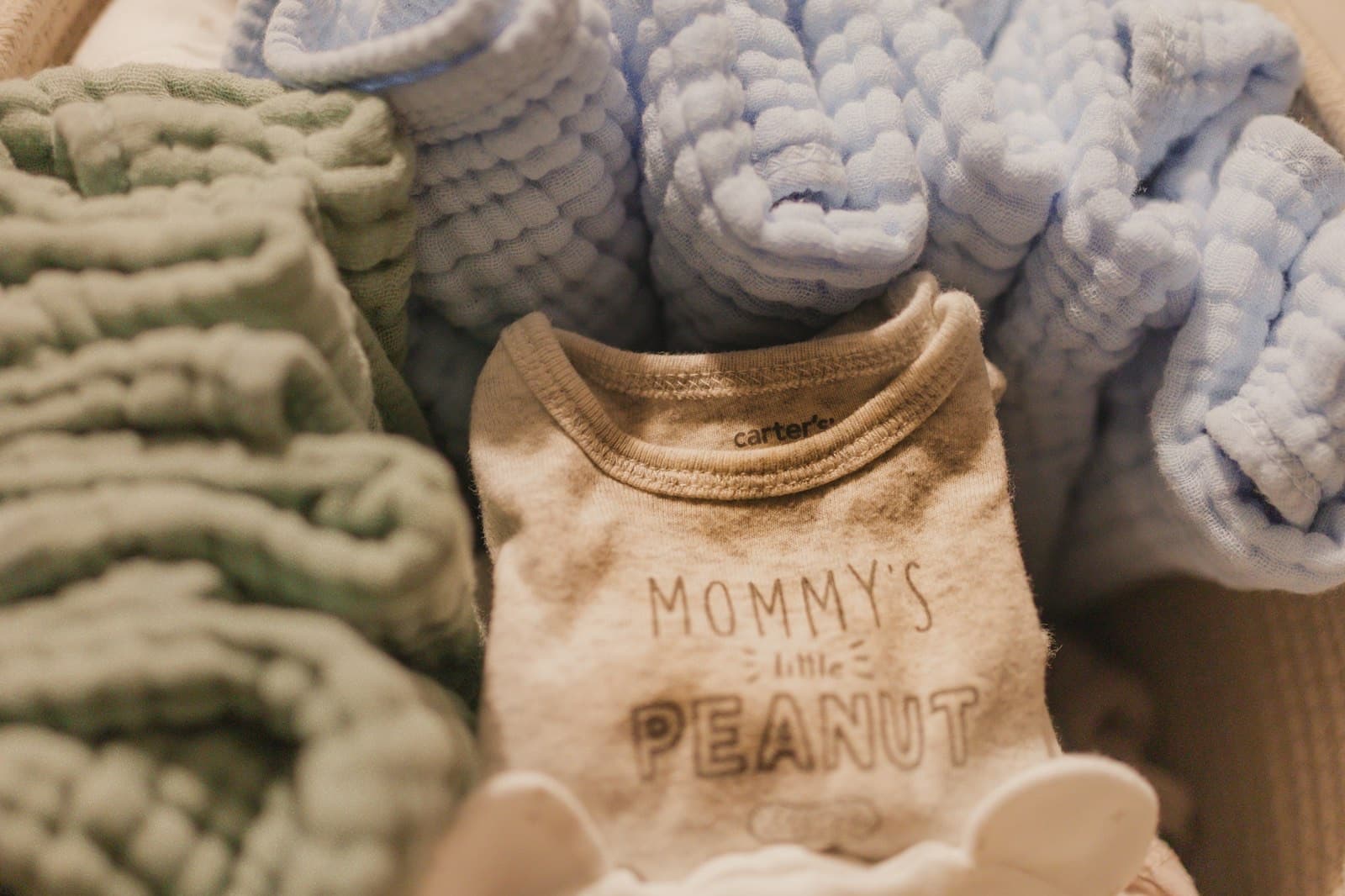
What should I take to the hospital for birth and when should I pack the bag?
The easiest way is to split the bag into four parts: documents and test results, things for you, things for the baby and things for your birth partner. The documents you need on admission to birth and the hospital bag are topics of the framework antenatal education programme in the Polish organisational standard of perinatal care (part IV, para. 4, point 3). Your midwife at birth class should therefore go through them with you. Confirm the full list for your own hospital with the hospital anyway, because wards have their own rules.
Sources differ on when to pack:
| Source | When to pack the bag |
|---|---|
| NHS (United Kingdom) | At least 3 weeks before your due date, because only 1 baby in 20 arrives on the due date. |
| DOZ.pl, author with a master's degree in midwifery | About 4-6 weeks before the due date, and at least a month earlier if the risk of preterm birth is higher. |
It is safest to have the bag ready well before the last week. Some results, such as the swab for group B streptococcus (GBS), are taken only around weeks 33-37 of pregnancy, so you will complete the folder of documents last.
Which documents and test results should I bring to the maternity ward?
Requirements vary, so here is one hospital as an example. Salve Medica in Łódź lists these documents and tests in its 2026 patient guide:
| Document or test | What the hospital states |
|---|---|
| Blood group | A laboratory result: a confirmed one, or two different tests, or a blood group identification card. |
| Ultrasound | All results from the pregnancy. |
| HBs, anti-HCV, anti-HIV | HBs antigen, anti-HCV and anti-HIV antibodies; tests valid for 3 months. |
| GBS culture | A vaginal and rectal swab for group B streptococcus, taken around weeks 33-37 of pregnancy. |
| Syphilis | WR, VDRL or USR; a result from early pregnancy is fine. |
| ID card and referral | Your ID card and the referral to hospital. |
| Birth plan | A paper copy of the birth plan. |
| Hospital documents | Medical certificates and discharge summaries from hospital stays during this pregnancy, if you had any. |
DOZ.pl also lists the pregnancy record (karta przebiegu ciąży), a current blood count and a urine test. The Salve list does not name the pregnancy record separately, so ask your hospital whether it wants to see it. DOZ.pl also points out that being registered as a blood donor does not replace a laboratory result: earlier results without such confirmation may serve as information only.
The birth plan is a document you agree with your pregnancy care provider. The standard says it is attached to your medical records once you report for birth, but a paper copy in your bag helps if nobody can find it. We explain how to write one in our article on the birth plan.
What should I pack for myself for labour and for the stay after birth?
For labour itself the NHS lists things that make time in the delivery room easier:
- Comfortable, loose clothing, a dressing gown, and slippers or flip-flops that also work in the shower.
- A fan or a water spray to keep cool, towels and your own pillows.
- Snacks, drinks and a water bottle (the NHS suggests a straw may help).
- A TENS machine with spare batteries, if you plan to use one.
- Any medicines you take, spare glasses or contact lenses, and a wash bag.
- A phone and charger (a long cable or battery pack helps), a book, music or podcasts, and an eye mask because the ward is brightly lit.
Eating and drinking during labour is not forbidden. The Polish organisational standard of perinatal care gives a woman in labour the option to drink clear fluids, including in the active phase, and to eat light, easily digestible meals; you discuss meals with the person caring for you (part VI, paras. 3 and 4).
For the stay after birth, the lists from the two sources partly overlap and differ in detail:
| Item | NHS | Salve hospital (Łódź) |
|---|---|---|
| Clothes and footwear | 3 changes of comfortable clothes and socks, front-opening or loose nightwear if you breastfeed, slippers or flip-flops. | 3 nightdresses, shower flip-flops and slippers, a towel. |
| Underwear | 5 or 6 pairs of knickers (disposable ones may be useful). | 6 pairs of mesh briefs; they must not be made of non-woven fabric. |
| Pads and bed protectors | 2 packets of super-absorbent maternity pads. | 2-3 packets of gynaecological pads and about 3 packets of 60 x 90 cm bed protectors. |
| Breastfeeding | 2 or 3 comfortable bras (nursing bras if you breastfeed) and breast pads. | Nipple cream. |
| Toiletries and water | A wash bag with the basics. | Toiletries and still water with a spout. |
The differences show even in something as simple as the type of briefs, so build your final list from the advice of the hospital where you will give birth. We describe what happens after birth and how long the postpartum period lasts in a separate article.
What should I pack for the newborn?
The NHS and the Salve hospital describe baby items to a similar extent, with different quantities:
| Item | NHS | Salve hospital (Łódź) |
|---|---|---|
| Clothes | Bodysuits, vests and sleepsuits, an outfit for going home, a hat, scratch mittens, socks or booties; a snowsuit if it is cold. | 3 sleepsuits, 1 cotton hat without ties, 1 pair of socks. |
| Nappies and care | Nappies, cotton wool or wipes. | Disposable nappies, 6 terry cloth nappies, wet wipes and nappy rash cream. |
| Wraps | Muslin squares and a blanket or shawl. | A swaddling blanket (becik). |
Neither of the two lists mentions formula. If you already know you will bottle-feed or top up, ask the hospital what the ward provides and what you should bring yourself. DOZ.pl notes that some hospitals provide basic hygiene products, clothing and some baby items, while others expect you to bring everything.
Do I need a car seat already when leaving the hospital?
The NHS lists a car seat for the trip home among the baby's things. In Poland a child under 150 cm must travel in a child seat regardless of age, according to the Polish Police, which cites the Road Traffic Act. The seat has to be fitted following the manufacturer's recommendations, and fitting it incorrectly is an offence.
It is best to sort this out early: buy or borrow a seat made for newborns, check the fitting instructions for your car, and ask someone close to bring it, together with the going-home outfit, on the day of discharge. For the current wording of the law and its exceptions (for example a taxi ride), check the up-to-date text of the act.
What should my birth partner pack?
The Polish organisational standard of perinatal care requires that a woman in labour is allowed the support of the child's father or another close person (part VI, para. 3, point 3), and the birth plan covers your wishes about that person being present. It helps if they have a small bag of their own:
- A change of clothes, toothbrush, toothpaste and deodorant, and a phone with a charger (NHS list).
- Snacks and drinks, change for the car park and vending machine, a camera or camcorder (NHS list).
- Swimwear if they will get into the birth pool with you (NHS list).
- The Salve hospital says a disposable outfit for the birth partner is provided on the ward, and what you need to bring are shoe covers or flip-flops.
Check the details, such as the number of people or hours, with the hospital in advance, because the standard says care is adapted to the organisational capacity of the facility (part VI, para. 3, point 2).
How do I check what applies at my hospital?
Maternity wards have their own lists, so treat this one as a way to prepare questions, not as a replacement for the hospital's rules. The simplest steps:
- Check the maternity ward's website and ask at the admissions office which documents and results are required and how long they stay valid.
- Ask what the hospital supplies itself (bed protectors, nappies, baby care products) and what you must bring.
- Ask about the rules for birth partners and what to bring for a caesarean. Salve says, for example, that before a planned caesarean you can eat and drink until midnight the day before.
- Go through the list with your midwife at birth class or at an antenatal visit, because the hospital bag is part of the antenatal education programme.
- Do not overpack. Salve says that, without contraindications, the stay after a vaginal birth is 1-2 days and after a caesarean 2 days, and DOZ.pl mentions about 2 days after a physiological birth.
When contractions start or your waters break, call the ward first, as we explain in our article on the signs of labour and when to go to hospital. You can go through the list, the birth plan and the hospital bag with the midwife who runs your birth class or who will be with you at the birth.