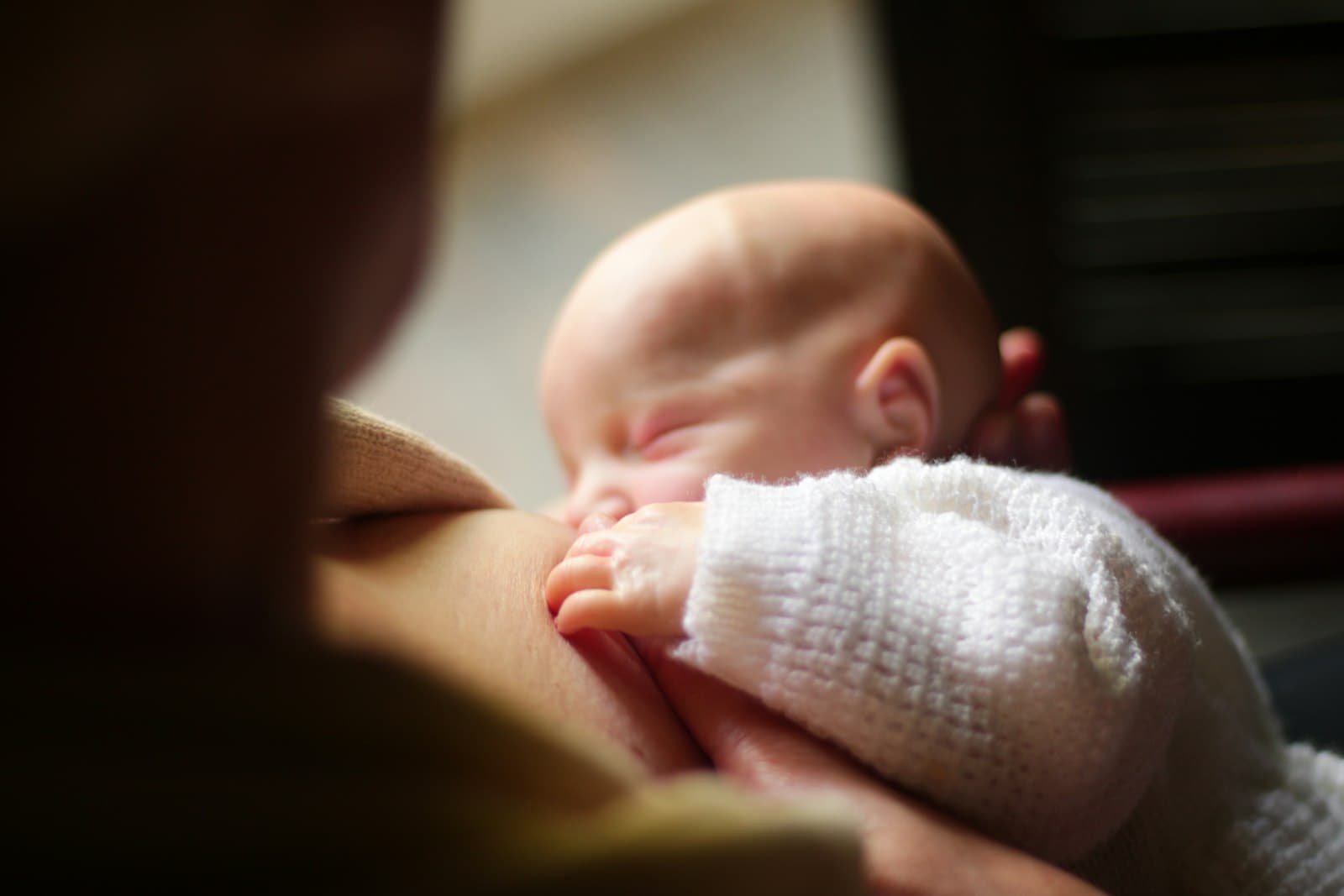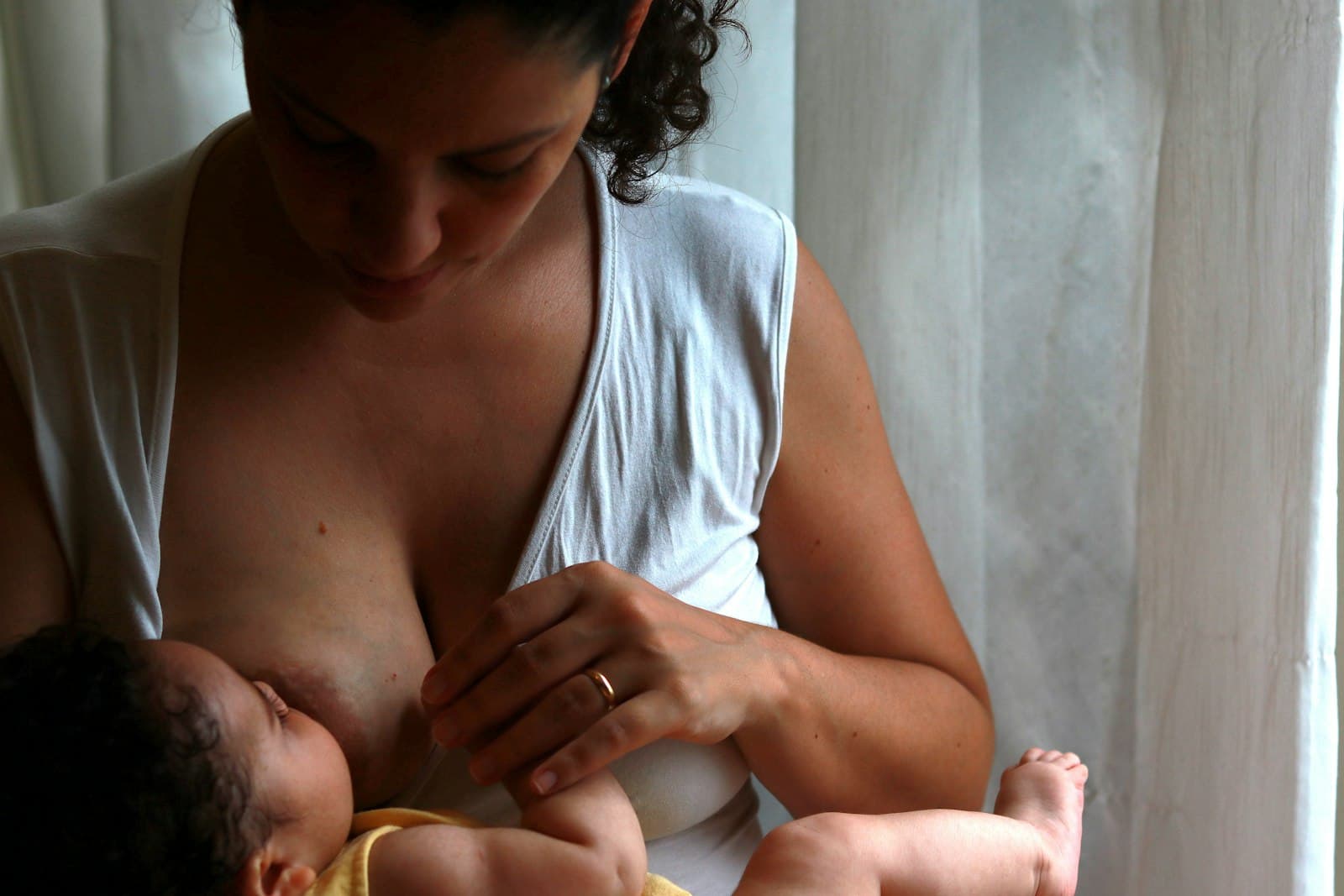
How often should you feed a newborn?
Newborns are fed on demand, which means when they show they want to eat, not by the clock. The Polish Society for Paediatric Gastroenterology, Hepatology and Nutrition (PTGHiŻD) says that in the first six months a breastfed baby feeds on average 8-12 times in 24 hours. Lactation consultant Dr Magdalena Nehring-Gugulska gives the same figure in Medycyna Praktyczna (mp.pl, a Polish medical portal). The Polish standard of perinatal care says that in the early weeks a baby is put to the breast up to a dozen or more times a day.
The first day can be different. The Academy of Breastfeeding Medicine (ABM) describes how, after about 2 hours of alertness following birth, newborns usually become sleepy and have irregular sleep-wake cycles. According to the feeding assessment tool of UNICEF UK Baby Friendly, a baby should feed at least 3-4 times on day 1, and from day 2 the number and pattern of feeds varies from day to day.
- Breastfeeding: 8-12 times in 24 hours according to PTGHiŻD and Medycyna Praktyczna. The American Academy of Pediatrics (AAP) says breastfed newborns usually nurse every 2 hours and that 10-12 feeds in 24 hours is the norm.
- Formula: according to the AAP, most newborns feed every 2-3 hours, at least 8 times in 24 hours. The PTGHiŻD feeding schedule gives 8-10 feeds a day in the first month.
- Night feeds: according to the effective breastfeeding indicators in Medycyna Praktyczna, 1-2 feeds at night are normal, and a breastfed baby should feed at least once during the night.
It is also normal for a baby to want to feed very often for a few hours, for example every hour, often in the afternoon, as Medycyna Praktyczna describes. This is called cluster feeding. The ABM considers it typical newborn behaviour but advises watching a feed to make sure the baby is latched well. Medycyna Praktyczna points out that if a baby feeds 12 or more times a day with no breaks and is literally on the breast all day, it is worth getting help.
Should you wake a newborn to feed and how long can the gap be?
Yes, in the first weeks a sleeping newborn sometimes needs waking. The Polish standard of perinatal care recommends waking a baby who does not wake on their own 3-4 hours after the start of the last feed. The exception is the first day of life, when waking is not required. Medycyna Praktyczna specifies that the gap from the start of one feed to the start of the next should not exceed 3 hours during the day and 4 hours at night.
For formula-fed babies the AAP gives a slightly longer limit: if in the first weeks your baby sleeps longer than 4-5 hours and misses feeds, wake them and offer a bottle. The ABM suggests keeping a sleepy newborn skin-to-skin while the mother is awake and gently rousing them for frequent attempts to feed.
Sleepiness can also be a sign of jaundice. The NHS advises waking a baby with jaundice for feeds if they sleep a lot, and if they are sleepier than usual, hard to wake or not feeding, to get help straight away. There is more on this in the section on warning signs.
How long does a newborn breastfeed last?
Feed length varies a lot between babies. The NHS says some babies prefer frequent short feeds, others longer ones, and some a mixture of both. The UNICEF UK Baby Friendly tool assumes a baby usually feeds for between 5 and 40 minutes and comes off the breast on their own at the end.
Polish sources give a minimum. According to Medycyna Praktyczna a feed should last at least 10 minutes on one breast, most often 15-20 minutes, and the effective breastfeeding indicators mention bursts of swallowing heard for at least 10 minutes at each breast. So the sources differ on the lower limit, but they agree that whether the baby is swallowing milk matters more than the clock.
- Let your baby finish the first breast before offering the second. This is what the NHS and Medycyna Praktyczna advise.
- Start the next feed on the breast the baby fed from last, as Medycyna Praktyczna recommends.
- According to UNICEF UK Baby Friendly, breasts and nipples should be comfortable during a feed, and the nipple should be the same shape at the end of a feed as at the start. If that is not the case, ask a midwife to watch a whole feed.
How much milk does a newborn need in the first days and how big is their stomach?
In the first days a newborn drinks very little, because that is how much the breasts produce and how much the baby needs. The ABM writes that small amounts of colostrum suit the size of a newborn's stomach, protect a healthy term baby from low blood sugar and make it easier to learn to coordinate sucking, swallowing and breathing. The table shows the average amounts of colostrum that healthy breastfed newborns drink, based on studies collected by the ABM:
| Time since birth | Average per feed |
|---|---|
| First 24 hours | 2-10 ml |
| 24-48 hours | 5-15 ml |
| 48-72 hours | 15-30 ml |
| 72-96 hours | 30-60 ml |
These figures are only a guide. The ABM notes that there is little research, results vary widely and feeding should be based on the baby's cues anyway. The same goes for popular graphics comparing a newborn's stomach to pieces of fruit. A 2013 review in Acta Paediatrica, based on just 6 studies, estimates the stomach capacity at birth at about 20 ml. That is an approximation, not a target to keep to. The AAP says that in the first weeks a breastfed baby usually takes about 30 ml per feed.
How much formula or expressed milk should a newborn have?
The amounts in tables are averages, not a plan to follow. PTGHiŻD reminds parents of the rule: the parent decides when the baby eats and the baby decides how much, so a feed smaller or larger than the suggested amount is fine. Approximate values:
| Baby's age | Amount per feed | Feeds in 24 hours | Source |
|---|---|---|---|
| Days 1-2 | about 15 ml | every 2-3 hours, at least 8 times | AAP |
| Week 1 | 30-60 ml, no more | on demand, at least 8 times | AAP |
| Month 1 | about 110 ml (the schedule gives a range of 10-120 ml) | 8-10 | PTGHiŻD |
| End of month 1 | 90-120 ml | usually every 3-4 hours | AAP |
| Months 2-4 | 120-140 ml | 6 | PTGHiŻD |
You can also estimate the daily amount from body weight. NHS Wales says that by the end of the first week most babies need about 150-200 ml of formula per kilogram of body weight a day, until 6 months. The AAP gives an average of 75 ml for every 453 g of body weight, which works out at about 165 ml per kilogram, and usually no more than 960 ml a day. For a baby weighing 3.5 kg that is about 525-700 ml according to the NHS or about 580 ml according to the AAP. Both are averages, and an individual baby may drink more or less.
When feeding expressed breast milk, a figure from PTGHiŻD helps: healthy babies aged 1-6 months who are exclusively breastfed take on average about 75 g of milk from one breast and about 101 g from both breasts at a feed. The ABM points out that babies fed formula freely usually drink more than breastfed babies and may be overfed, and PTGHiŻD lists overfeeding as a common mistake in infant feeding.
So with a bottle, watch your baby rather than the markings. The AAP notes that a bottle-fed baby will not always pull away when full. According to the NHS, signs that they have had enough are splayed fingers and toes, milk spilling out of the mouth, stopping sucking, turning the head away and pushing the bottle away. There is no need to coax your baby to finish the bottle.
How can you tell a newborn is hungry, and when they are full?
Feeding is easiest before your baby starts crying. The AAP and the NHS stress that crying is a late sign of hunger. Earlier signs, according to the AAP and the Polish standard of perinatal care, are:
- being awake and more active,
- opening the mouth, licking the lips, sticking the tongue out,
- rooting, which means turning the head with an open mouth in search of the breast,
- putting hands to the mouth and sucking on anything within reach,
- fussing, which turns into crying if they have to wait longer.
PTGHiŻD describes fullness as falling asleep, fussing while eating, slowing down, stopping sucking and spitting out or refusing the bottle teat. According to the NHS, a breastfed baby comes off the breast on their own and looks content after most feeds. Keep in mind, though, that a baby's behaviour is a subjective clue. Medycyna Praktyczna points out that some babies cry a lot and gain weight very well, while others are very calm but not getting enough. That is why nappies and weight count too.
Is your baby getting enough? Nappies, swallowing and weight
Breasts have no measuring scale, but several signs together show well whether a baby is getting enough milk. The NHS lists cheeks that stay rounded, not hollow, during sucking, swallowing you can see and hear, the baby coming off the breast on their own at the end of a feed and softer breasts after feeds. UNICEF UK Baby Friendly adds deep, rhythmic sucks and notes that until day 3-4, before the milk comes in, swallowing may be harder to hear.
Nappies are the simplest objective indicator. Sources give slightly different numbers, so the table puts them side by side. They apply to breastfed babies:
| Day of life | Wet nappies in 24 hours | Poos in 24 hours |
|---|---|---|
| Days 1-2 | 1-2 or more (UNICEF UK), usually 2-3 in the first 48 hours (NHS) | at least 1, meconium (UNICEF UK) |
| Days 3-4 | 3-4 or more, getting heavier (UNICEF UK); 3-5 from day 3 (Medycyna Praktyczna) | at least 2 changing stools (UNICEF UK); according to the AAP at least 4 on day 4 |
| Days 5-7 | at least 6 heavy from day 5 (NHS); 4-6 (Medycyna Praktyczna) | at least 2 soft, yellow poos (NHS) |
| Day 8 to week 6 | 6-8 (Medycyna Praktyczna), at least 6 heavy (NHS, UNICEF UK) | at least 2 yellow poos (NHS); 3-4 soft, mushy poos (Medycyna Praktyczna) |
A formula-fed baby should, according to the NHS, have at least 6 wet nappies a day and at least one soft poo. With disposable nappies it is hard to tell whether they are wet. The NHS suggests pouring 2-4 tablespoons of water into a dry nappy to see what a heavy, wet nappy looks and feels like. We write more about the colour and frequency of poos in our article on newborn poo.
Weight is the third indicator. Losing weight in the first days is normal: in a study cited by the ABM, exclusively breastfed babies lost on average 5.5% of their birth weight, and more than one in five lost over 7%. According to the ABM, a 10% loss does not automatically mean topping up, but it is a reason to assess the baby and the feeding. Breastfed babies regained their birth weight after 8.3 days on average, and 97.5% had done so by day 21. We cover weight gain norms and how to weigh a baby in our article on newborn weight loss.
Why does a baby suddenly want to feed more often? Growth spurts and the lactation crisis
There are days when a baby wants to feed almost non-stop. The NHS says this more frequent feeding is very normal, usually happens in the first 3-4 months, during the day, at night or both, and that during a growth spurt it may last a few days. In Poland it is often put down to growth spurts or a "lactation crisis" at 3-4 weeks and at 3 months.
The sources do not agree here. The authors of an article in Medycyna Praktyczna, including Dr Monika Żukowska-Rubik and Dr Magdalena Nehring-Gugulska, write that a lactation crisis in this sense simply does not exist, and that the idea of growth spurts as its cause has been rejected. They explain that prolactin levels, high in the first weeks, gradually fall and return to pre-pregnancy levels at around 3 months. When feeds are too infrequent or too short, or the baby sucks weakly, milk supply can drop.
- Check nappies and weight, the objective indicators from the table above, instead of judging only by how your baby behaves.
- Feed your baby as often as they want. Medycyna Praktyczna also suggests pumping 3-4 times a day after feeds and says that after a few days of this stimulation the breasts start to produce more.
- If you are still worried, book a lactation consultant or a midwife to watch a feed.
When should you call a midwife or doctor because your baby may not be getting enough?
Contact a midwife or doctor the same day if:
- there are fewer wet nappies than the table shows, or suddenly fewer than on previous days,
- on day 4 your baby has had fewer than 4 poos, or on day 5 is still passing meconium, which the ABM lists among signs of too little milk,
- your baby has lost 10% of their birth weight or more, or has not regained it by 3 weeks,
- your baby regularly does not wake for feeds or you cannot hear swallowing during feeds, meaning the signs UNICEF UK Baby Friendly lists for a baby who is feeding well are missing,
- your baby is yellow and the jaundice is not getting better or is getting worse, the pee is dark yellow or brown, or the poo is very pale, which the NHS treats as a reason for urgent advice,
- for dehydration the NHS also lists a sunken soft spot (fontanelle), few or no tears when crying, and drowsiness or irritability.
Call 112 or go to a hospital emergency department if your baby is floppy or stiff, very hard to wake, has stopped feeding or has no wet nappies. The NHS lists these signs as a reason for immediate help in a baby with jaundice, and the ABM links poor feeding and lethargy with significant dehydration that needs a doctor's assessment.
After the birth, a primary care (POZ) midwife makes at least 4 free home visits under the NFZ, Poland's public health insurer, the first within 48 hours of being notified of the birth, not counting Saturdays, Sundays and public holidays. Under the standard of perinatal care she assesses the baby's weight gain, skin yellowing, the feeding technique, the baby's sucking skills and how effective feeding is, and helps with breastfeeding problems. If you need help sooner, a longer visit or support with bottle feeding or mixed feeding, on MyMidwife you will find midwives with lactation experience who come to your home.